What does it really mean to become a Qigong teacher?
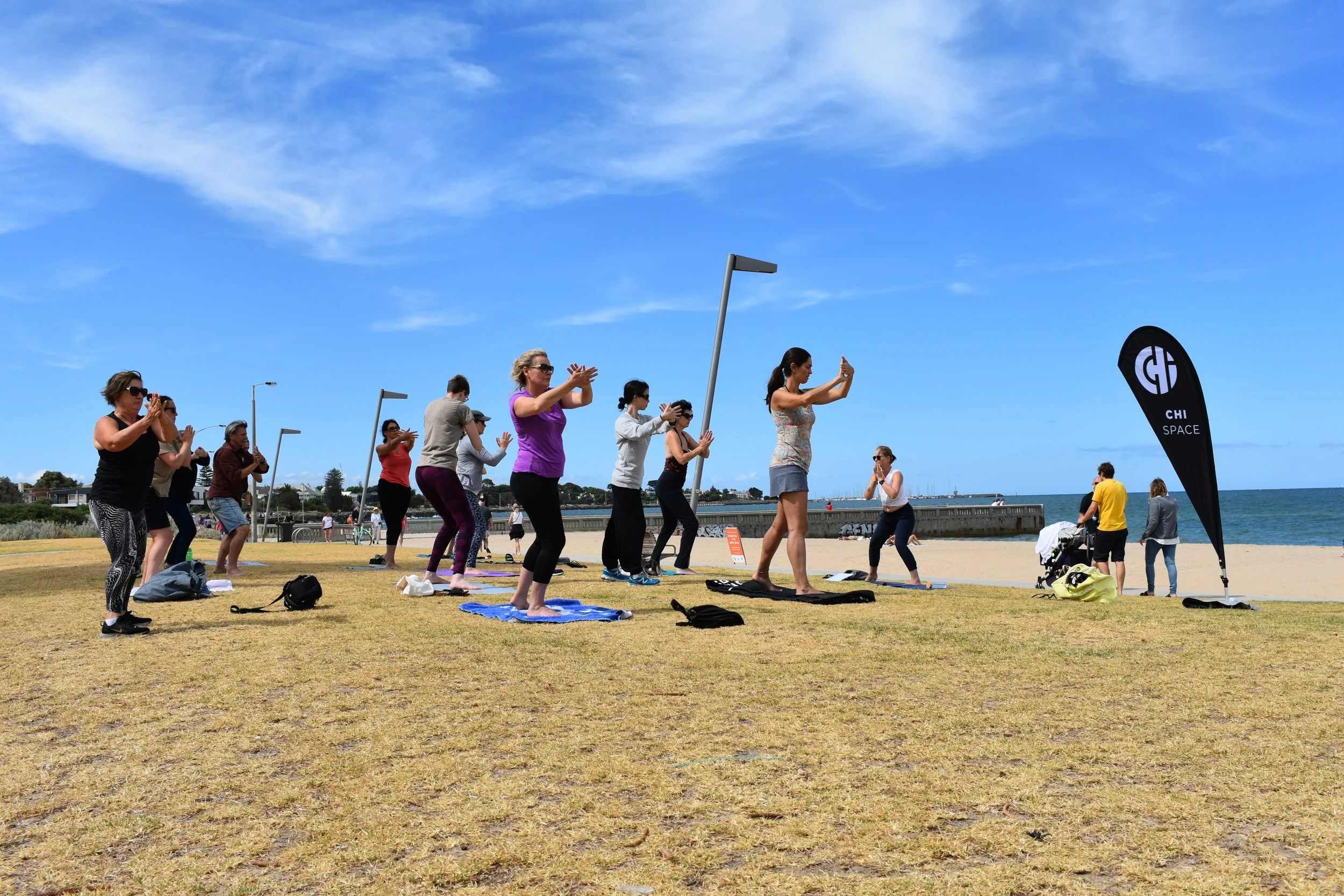
Sometimes all it takes is one experience with Qigong. A shift in health. A deep sense of peace. Feeling energy for the first time. A moment where something simply clicks.
Yet while the inspiration to teach can arise quickly, becoming a Qigong teacher is often very different from what people imagine.
I've seen people come to Qigong Teacher Training after years of practice and I've seen others begin asking about teaching not long after discovering Qigong themselves.
When something has a real impact on your life, it's natural to want to share it.
But while the desire to teach can arise quickly, becoming a capable Qigong teacher is something that develops over time. It requires more than learning movements or understanding theory. It asks us to cultivate our own practice, deepen our awareness and develop the capacity to guide others from direct experience.
So why do people feel called to teach Qigong in the first place?
How I Became a Qigong Teacher
I didn't begin practising Qigong with any intention of becoming a teacher.
Like many people, I started because I was looking for something that would help me feel better. At the time, I was navigating a period of significant change and I found myself drawn to a practice that offered a sense of grounding, clarity and steadiness.
Over time, what began as a way to support my own wellbeing became something much more. The deeper I went into Qigong, the more I realised that its value extends far beyond the physical movements. While movement, breath and alignment can certainly improve health and vitality, there are deeper layers to the practice that reveal themselves through consistent cultivation.
Qigong became a way of developing greater awareness of myself. A way of recognising patterns, understanding where energy becomes stagnant and cultivating a more harmonious relationship between body, mind and spirit.
When you experience meaningful change through your own practice, it's natural to want to share it.
For many teachers, this is where the journey begins. Not with a desire to build a career or gain a qualification, but through an appreciation for the impact the practice has had on their own life.

Why People Choose to Teach Qigong
So why do people choose to teach Qigong?
At its heart, I believe it comes from a love of the practice. Perhaps it's a love of movement. A fascination with Qi. A curiosity about how something as simple as standing, breathing and paying attention can have such a profound effect on health and wellbeing.
For me, teaching grew from experiencing the benefits of Qigong firsthand and recognising the potential it has to help people reconnect with themselves and live with greater vitality.
I've also come to see that many people misunderstand what creates transformation in Qigong.
Learning a form is not the same as developing Qi skill.
Forms are important. They provide structure and give us a method through which to practise. But simply moving your body through a sequence of movements will only take you so far. If Qigong remains nothing more than choreography, its deeper potential is never realised.
I've met practitioners who know many forms yet struggle to sense, cultivate or work with Qi in a meaningful way. I've also met practitioners with a much simpler practice who have developed a deep sensitivity to Qi through consistent cultivation.
The most meaningful changes occur when practice becomes a process of cultivation. When we begin developing awareness, working with Qi and engaging with ourselves more honestly and deeply.
In my experience, a capable Qigong teacher develops more than knowledge and technique. They develop awareness, sensitivity and an embodied understanding of the principles that sit beneath the movements.
For many teachers, it is this deeper aspect of the practice that inspires them to share Qigong with others. Not simply because they love Qigong, but because they have experienced firsthand how transformative practice can be.

When Are You Ready to Teach Qigong?
One of the questions prospective students frequently ask is:
"Will I be able to teach after completing your training?"
My answer is always the same:
You're only ready to teach to the depth that you've cultivated yourself.
A training program can provide knowledge, structure, guidance and support. But it cannot do the cultivation for you. Ultimately, we can only guide others as far as we've gone ourselves.
Over time, the principles of Yang Sheng Fa, or life-nurturing, begin shaping more than what happens during practice sessions. They influence the way we live, the choices we make and the relationship we have with ourselves.
At some point, Qigong stops being something we do and becomes something we embody.
In my experience, that is where teaching begins to develop depth.
Embodying Qigong Before Teaching It
Many people who enquire about Qigong Teacher Training already have experience in another field. They may be yoga teachers, bodyworkers, therapists, coaches, health practitioners or movement professionals who recognise the value of Qigong and want to incorporate it into their existing work.
In many ways, this makes sense. Qigong can complement a wide range of disciplines and offer powerful tools for cultivating awareness, vitality and self-understanding.
What I've observed, however, is that Qigong is often approached as something that can simply be added to an existing professional toolkit. Learn a form. Complete a training. Add Qigong to the list of services offered.
The reality is often more nuanced than that.
Qigong is not simply a collection of movements, techniques or exercises. It is a practice of cultivation.
Without developing a relationship with the practice itself, it's easy to teach the outer shape of Qigong while missing much of its depth. This is one of the reasons my approach to training teachers has changed significantly.
Today, I'm far less interested in helping people accumulate information and far more interested in helping them establish a real practice. I've come to see that Qigong Teacher Training isn't really about creating teachers. It's about helping practitioners deepen their practice.
For some people, teaching naturally emerges from that process. Because ultimately, the quality of our teaching is shaped by the depth of our cultivation.
The movements matter.
The theory matters.
But the practitioner matters too.
In my experience, the most capable Qigong teachers are not necessarily those who know the most. They are the ones who continue to practise, explore and embody what they teach.
If you're considering becoming a Qigong teacher, focus less on the question of when you'll be ready to teach and more on the depth of the practice you're cultivating.
The teaching will follow.
If you're interested in exploring what Qigong can become as a practice, a path and a way of understanding ourselves, I share new writing and reflections by email.