Breathing in Qigong: Why Most Modern Breathing Advice Gets It Wrong

In modern wellness culture there is endless advice about breathing techniques – belly breathing, box breathing, nasal breathing and more.
Breathing in Qigong, however, is often approached quite differently. Rather than trying to control the breath, practice focuses on developing the internal conditions that allow natural breathing to emerge.
How Breathing Patterns Change Over Time
Daoist practitioners closely observed nature, including the way human beings breathe. Infants and young children naturally breathe through the nose, with the breath moving through the whole torso so the abdomen and chest expand and soften with each cycle.
As life unfolds, breathing patterns often change. The breath tends to become shallower and rise higher in the chest, and over time the natural relationship between breathing, Qi and the movement of blood through the body can become disrupted.
Some Daoist cultivation traditions also describe subtle differences in how breathing patterns tend to develop in men and women over time. In men, the breath often becomes more concentrated toward the front of the upper chest, while in women it may be felt more strongly through the upper back of the body. These observations are often explained through the Yin and Yang dynamics of the body and the relationship between the front and back energetic channels.
Observations like this are not really describing the lungs themselves, but the way posture, tension and Qi distribution can gradually shape how the breath moves through the body. Over time these kinds of patterns can become deeply ingrained.
In many Qigong practices this is not addressed by trying to impose a particular breathing technique. Instead, practice gradually changes the internal mechanics of the body. As posture stabilises and the lower abdomen becomes more active, the deeper structures of the torso begin working together differently. Practices such as Standing Qigong are traditionally used to help develop these internal relationships within the body.
As these internal relationships develop, breathing often begins to change naturally. The breath settles, deepens and spreads more evenly through the body without needing to be consciously controlled. From this perspective, breathing is less something we practise directly and more something that reflects the internal condition of the body.
This perspective on breath echoes a well-known passage from the Dao De Jing:
“Nurture the darkness of your soul until you become whole.
Can you do this and not fail?
Can you focus your life-breath until you become supple as a newborn child?”
How Modern Life Disrupts Natural Breathing
As people move through life, the ability to breathe naturally often becomes compromised. Patterns of stress, posture, emotional tension and the demands of modern life can gradually shape the way the breath moves through the body. This is why Qigong places such importance on developing posture, alignment and Song in practice. Long hours sitting, injuries, habitual tension, technology use and unresolved emotional stress can all influence breathing patterns over time.
Common forms of breathing dysfunction include mouth breathing, over-breathing and shallow breathing. To this list we can also add something that is widely taught across modern wellness practices: exaggerated belly breathing.
For many years I was told in yoga, meditation and even Qigong classes to breathe by expanding the stomach on the inhale and letting it fall back on the exhale. I have to admit, I taught the same thing myself for a time.
While this approach is often offered as a way to encourage relaxation, deliberately pushing the breath into the belly can sometimes interfere with the natural coordination of the torso. The rib cage and chest may stop moving as freely as they should, the centre of gravity can shift forward and the relationship between the diaphragm, spine and pelvis can become less balanced.
It is also common advice to simply “take a deep breath.” While this is not necessarily harmful, when breathing patterns are already compromised it can sometimes encourage what is known as vertical breathing or over-breathing. In these patterns the breath becomes large and effortful rather than settled and coordinated with the body.
Over time dysfunctional breathing patterns can influence many aspects of health and wellbeing, contributing to fatigue, poor concentration, postural strain, digestive disruption, sleep difficulties and increased anxiety.

Why Breathing Advice Is So Confusing
Observations about natural breathing are not unique to Daoist traditions. Similar insights appear in many cultures. European settlers, for example, observed that some Native American mothers would gently press their babies’ lips together to encourage the development of natural nasal breathing.
Across the animal kingdom nasal breathing is also the norm. With the exception of aquatic animals and diving birds, most animals breathe through the nose even during intense exertion. Mouth breathing is generally only seen when an animal is unwell or under extreme stress.
In my own journey of addressing breathing dysfunction, I began to realise that my strong emphasis on belly breathing had likely played a role in reinforcing some of the patterns I was trying to correct. Recognising this, I began working with a biomechanics practitioner to explore how posture, spinal compression and muscle tension influence the way the breath moves through the body. At the same time I returned to studying Qigong theory and philosophy more deeply, revisiting many of the teachings around breath that appear across Daoist cultivation traditions.
What quickly becomes apparent is that there is not just one way of breathing in these traditions. Daoist practices describe many different breathing methods, including abdominal breathing, reverse abdominal breathing, Dantian breathing, embryonic breathing, wave breathing, kidney breathing, pore breathing, lung meridian breathing, sipping breath and cleansing breath, among others. Each of these methods has a particular function and may be used within different stages or practices of Qigong, Shen Gong or Neigong.
It is perhaps no surprise that so much confusion exists around breathing. Even within Daoist traditions there is considerable variation in how these practices are described and taught. This may be one reason why many modern teachers simplify the instructions into something easy to follow, such as “just breathe into your belly.”
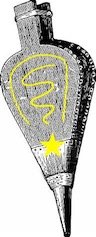
Yet many classical descriptions of breathing point to something more subtle. Daoist traditions often describe the breath moving like a bellows — expanding and contracting through the torso in a coordinated and balanced way. Interestingly, this description aligns closely with what I have been learning through biomechanics and through the deeper breathing methods found in Neigong practice.
Of course, many people today probably don’t even know what a bellows is.
Breathing in Qigong: The Bellows of the Body
When Daoist traditions describe breathing like a bellows, they are pointing to a coordinated expansion through the whole torso rather than forcing the breath into a single area. The breath draws downward toward the lower abdomen, but the focus does not remain there and the abdomen is not pushed outward unnaturally. Instead, the entire torso participates in the movement of the breath.
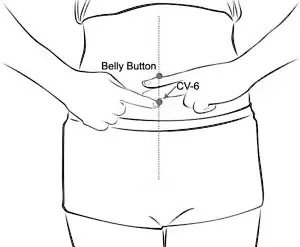
If we use the acupuncture point CV6 (Qi Hai) as a reference point, this can be felt as a subtle centre from which the breath begins to expand. The attention may briefly rest here at the start of the inhale, just long enough to sense a small spaciousness. As the inhalation continues, the expansion spreads through the whole “bellows” of the body — the sides of the ribs, the back, the centre of the torso and the upper chest.
Approached in this way, breathing becomes less about applying a technique and more about allowing the body to regain its natural coordination. As posture, tension patterns and internal balance gradually change, the breath often begins to organise itself differently.
This is something I have been rediscovering in my own practice. After many years of training, it can be surprisingly valuable to return to the foundations and look again at something as simple as breathing. Each time I do, new layers of understanding seem to reveal themselves. Sometimes the basics are not really basic at all.
If you're interested in exploring what becomes possible when we stop forcing and start creating the conditions for change, I share new writing and reflections by email.
Common Questions About Breathing in Qigong
Is belly breathing used in Qigong?
Some Qigong practices use abdominal breathing, but many traditions emphasise developing the internal conditions that allow breathing to change naturally rather than forcing the breath into the belly.
Why is nasal breathing important in Qigong?
Nasal breathing helps regulate airflow, supports balanced breathing patterns and aligns with how breathing naturally occurs in healthy bodies. In Qigong practice it also helps maintain a calm and coordinated relationship between breath, posture and Qi.