There are times when you just want everyone and everything to fuck off.
Nothing else to organise, nothing more to think about, nobody needing anything from you. Even the things you normally enjoy feel like too much, and the thought of having to take on one more thing brings a sense of resistance.
You just want to be left alone for a while.
It's not that any one thing is particularly difficult or overwhelming. It's the accumulation of everyday life, the commitments we've made, the expectations we carry and the continual demands on our attention. Even the things we choose for ourselves, the activities we enjoy and the things we know are good for us can begin to feel like another obligation. Something else to fit in, keep up with or make room for.
Sometimes there's just a heaviness to it. A feeling of being done.
How We Came to Live This Way
It's easy to assume it's because we have too much to do. Sometimes it is. Sometimes the list of to-dos and responsibilities is lonnnnnggg. I think, though, there's actually another aspect of our relationship with demands that we're not seeing clearly. It has to do with where our priorities lie.
For most people, most of the time, their focus is directed outwards, towards everything happening around them. We're consumed by what needs to be done, what others need from us, what we've committed to and what comes next. We've become so used to this way of living that our own experience has become secondary.
We're so occupied with responding to the external world that we've lost touch with what's happening within ourselves.
We move through our day attending to one thing after another. A sense of scatteredness, tension and overwhelm builds. We don't stop to really notice how we're feeling, what we're experiencing or what we might need. We push on, often on autopilot.
This is a big part of the tension creating the exhaustion. We want relief from the constant demands on our attention, but what we actually need is to tend to the connection with ourselves that has been pushed aside again and again.
What we're experiencing as overwhelm is, at least in part, what happens when we continually prioritise the demands of life and others before ourselves.
This way of relating to life is something we've been conditioned into through our upbringing, our experiences and the broader culture we live in. We've been taught to work hard, make a living, create security and build a good life for ourselves. We've been taught to value education, achievement, financial stability and the material things that give us comfort and security. All of this is part of navigating life in the world we live in.
What happens, though, when most of our energy and attention is directed towards creating, maintaining and improving our external circumstances?
Think about the generations before us. Many grew up during times of war, economic hardship and scarcity. Having enough, creating security and providing for their families were the essential priorities.
Those priorities made sense within the circumstances they were living in. As living conditions changed, the desire for security gradually evolved into something more. Having enough became wanting more. Material comfort became material aspiration. What we own, what we achieve and the life we present to the world became tied to how we measure success.
We've inherited this way of thinking. It's become so embedded in how we live that we barely question it. We're continually encouraged to acquire, achieve, improve and keep up. There's always something more to work towards, something else to organise, something else requiring our attention.
We've become very practised at functioning within the world around us.
We know how to work, earn a living, meet expectations, achieve and keep things moving. These are the things we've been taught to prioritise. When we look at the levels of mental and emotional distress in our society, it doesn't appear that we've given the same attention to learning how to navigate our own experience.
We've become better at managing the circumstances of our lives than understanding ourselves and our experience of living. Most people don't invest themselves in understanding how their experiences have shaped them, how their conditioning influences the way they meet the world, or what drives their responses and the patterns they repeat.
Without that understanding, we're on autopilot. We're at the mercy of our patterns and conditioned responses.
We can find ourselves reacting to the present through the lens of past experiences, without understanding what's actually influencing us. As we come to understand ourselves more deeply, we develop a greater capacity to recognise these patterns, take responsibility for how we meet life and make different choices.
We've been so busy keeping up with the external world that we've forgotten about the most important person in our lives.

Putting Ourselves Last
Living in a way that prioritises everyone and everything else is classic self-abandonment.
In contrast, developing a relationship with ourselves means becoming more curious about what we need and desire to feel fulfilled and happy, and consequently, to be of service to others. This is a day-to-day, moment-to-moment process.
When we feel like everything is just too much, it's because the Self isn't being considered a priority. The child within isn't having their needs met.
I can hear some people already responding with, "Oh, that's a selfish approach," or "What about my kids, or elderly parents, or job?" or, or, or…
Of course, if you've got a baby or a young child, their needs are going to come first. There are times in life when the needs of others quite rightly take priority. I'm not suggesting we abandon our responsibilities to others. I'm talking about all the other things that continually fill our days. The laundry, the cleaning, the errands, the endless list of things that always seem to need doing.
I'm saying our needs deserve to come before those things. If we took that approach more consistently, we'd have more time, clarity and capacity to be there for the people who need us.
There's another part to this, though. Putting ourselves first isn't simply about making more time for the things we enjoy or looking after our immediate needs. It's also about recognising that we have a relationship with ourselves that deserves attention.
It's about getting to know ourselves more deeply, recognising what's influencing us and beginning to see beyond the ways we've come to think about who we are.
To me, this is spiritual practice. Not as something separate from ordinary life or something we need to pursue outside ourselves, but as an ongoing process of understanding and developing ourselves. I've explored this more fully in What Is Spirituality? The Inner Work of the Self.
The thing is, we've become so used to directing our attention towards everything happening around us that turning it back towards ourselves can feel uncomfortable. We're much more practised at responding to what's happening around us than noticing what's happening within us. Even when life gives us an opportunity to pause, we don't necessarily know what to do with ourselves.
Learning to Be With Ourselves
There's an irony in wanting everyone and everything to leave us alone, then finding it difficult to actually be with ourselves when we finally get the opportunity.
Think about how quickly we reach for something to occupy our attention when there's nothing immediately requiring it. We pick up our phones, look for something to watch, find something to organise or start thinking about what needs to happen next. Even when we're not "busy", our minds are filled with conversations from the past, things we need to do tomorrow or all the other things we've got going on.
We've become so used to having our attention directed outwards that quiet moments and stillness can feel uncomfortable.
Without something to engage with, we become restless and distracted. Rather than settling into the space, we look for something to fill it. Having time to ourselves doesn't necessarily mean we're connected with ourselves. We can be alone, with nothing requiring our attention, and still be completely caught up in everything going on in our heads.
Developing a deeper relationship with ourselves means becoming more comfortable with simply being with ourselves. It means noticing what's happening within us, rather than immediately looking for something else to occupy our attention. This isn’t easy. When we're used to moving from one thing to the next, learning to be comfortable with stillness takes practice. It's not something we can necessarily switch on just because we've suddenly found ourselves with some free time.

Qigong and Turning Our Attention Inwards
This is where having a practice can be helpful. Not because we need another thing to add to our lives, but because we need a way to begin developing a different relationship with ourselves.
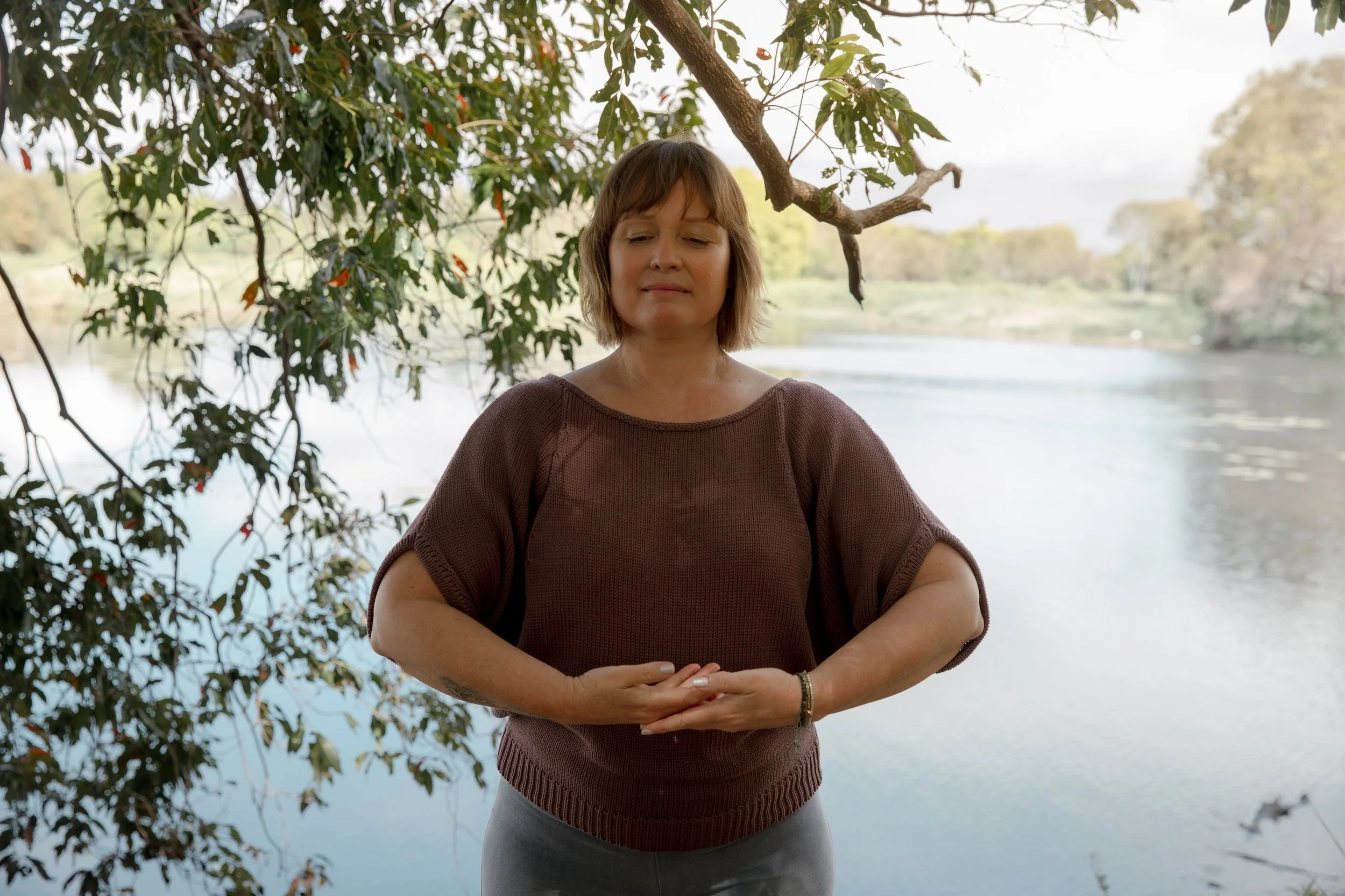
Qigong gives us a way to turn our attention inwards without having to sit down and try to be still.
When we focus on the precise, differentiated qualities of Qigong form, we begin to notice what's happening within us. We become more aware of the sensations in our body, the quality of our breathing and the way our focus tends to drift. We start to notice things that we might otherwise move straight past without giving them any attention.
Rather than being caught up in everything happening around us, we're becoming more familiar with what's happening within us. We're learning to notice what's happening as we're experiencing it, rather than only thinking about it afterwards or trying to make sense of it.
This is quite different from simply thinking about ourselves or analysing what's going on in our lives. It's about developing a more direct connection with ourselves through what we're feeling and experiencing in each moment.
As our practice develops, we begin to explore other aspects of that experience, including stillness. Not as something we have to achieve or force ourselves into, but as something we gradually become more comfortable with. We learn to settle, to listen and to give attention without immediately needing to do something with it.
What we're developing through this process goes beyond what happens during the practice. We're becoming more familiar with ourselves, learning to recognise what's happening within us and becoming more discerning in how we respond to the world around us.
Meeting Life Differently
Nurturing the relationship with ourselves doesn't mean the demands of life disappear. We still have responsibilities, commitments and things that require our attention. There will always be circumstances that challenge us and periods when there's more to navigate than we'd like.
The things we think we need to get done to keep up with the external world aren't going anywhere. There will always be something else requiring our attention, something else to organise, another responsibility or commitment waiting to be taken care of.
If we keep waiting until everything else is taken care of before giving attention to ourselves, when does that actually happen?
There will always be demands. The question is whether we continue to organise our lives around them, leaving ourselves until whatever time is left, or begin to recognise that understanding and developing the person who is living this life deserves to be a priority too.
As we develop this relationship with ourselves, we begin to meet the demands of life differently. We're less likely to move through everything on autopilot or treat every demand as though it requires our immediate attention. We have more room to recognise what matters, make choices about how we respond and notice when we're overriding our own needs.
This isn't about reaching some point where we've figured ourselves out, resolved everything or no longer have anything to work on. It's an ongoing process of getting to know ourselves and developing our capacity to navigate the experience of being human.
I think this is an important part of learning to live well. It's not simply about becoming better at managing everything life asks of us. It's about giving attention to the person who is experiencing all of it.
We can be engaged with life without being completely consumed by it. We can take responsibility for what needs our attention without continually putting ourselves last.
Perhaps what we need isn't for everyone and everything to fuck off. It's to stop overriding and abandoning ourselves.
If you're interested in exploring your relationship with yourself more deeply, I share further reflections on self-understanding, Qigong and the nature of our experience by email.