What Is the Lower Dantian? Why It Matters in Qigong Practice
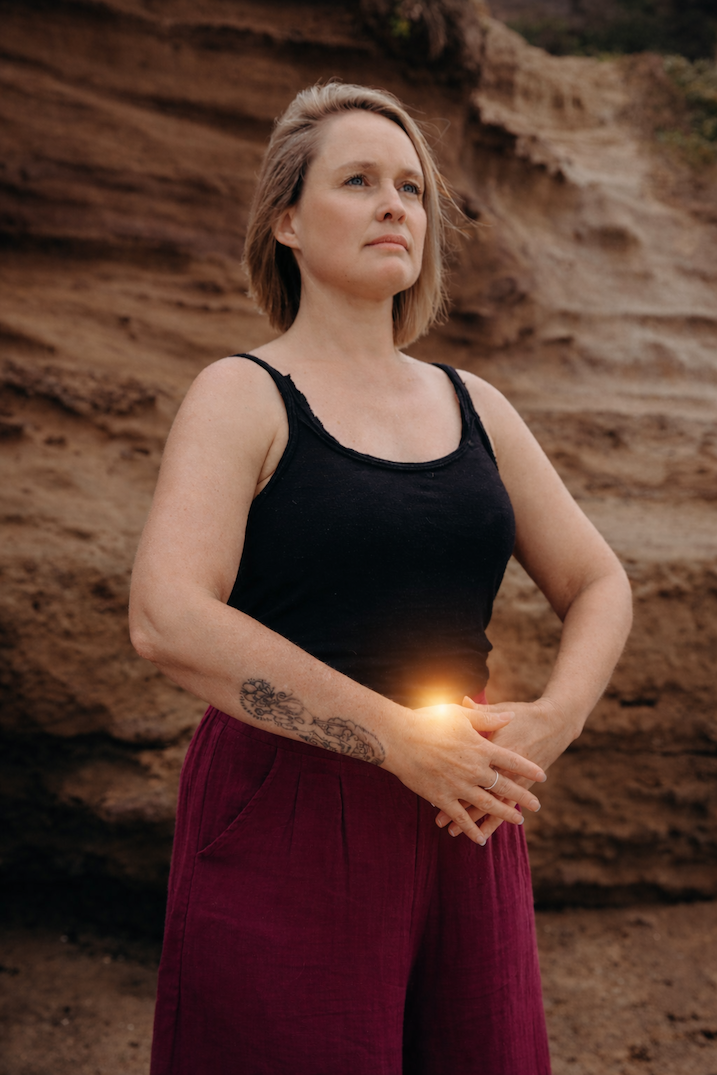
The first time warmth gathers in the lower abdomen, it can feel significant. A presence. A fullness. A sense that something has “switched on”. Qi is beginning to gathwer. The mind is more focussed and the body is responding to practice.
This is where the development of the Dantian begins, not ends.
What Is the Lower Dantian?
In Qigong and Nei Gong traditions, the Lower Dantian refers to the energetic centre located approximately an inch and a half below the navel and slightly inward toward the spine. It serves as a reservoir of Qi. This is where energy is gathered, stored and gradually refined.
The word Tian translates as field. There is an important nuance here. The Dantian is not something we automatically possess in a functional sense, but rather something that must be gradually structured and stabilised through practice. Sensations may suggest that Qi is gathering, but without a cultivated field in which it can settle and consolidate, that energy does not accumulate. It simply rises, disperses, or leaks away.
Dan translates to elixir, and to hold the elixir a Tian, a field, must take form.
While everyone possesses a lower field, its natural capacity for containment and organisation appears to vary considerably between individuals. For many, the abdominal space remains relatively unstructured, meaning Qi circulates but does not readily gather or accumulate. Over time, through deliberate and consistent practice, a subtle biomagnetic field begins to organise. Capacity increases incrementally.
It is slow work.
Why the Dantian Must Be Developed
The Dantian will not consolidate if the body, the vessel, is misaligned. Alignment is not about looking upright or bracing the abdomen. It requires the skill of aligned posture and Song — softening. It requires an expression of both Yin and Yang in equilibrium within the body. This means releasing unnecessary holding and tension, engaging deeper postural layers and allowing the vessel of the body to soften without collapsing. If structural integrity is lacking, the energetic centre cannot sink and settle.
Standing practice and Dantian Gong are the streams of practice to focus on in this developmental phase. They help create the physical conditions through which the field can gradually organise. As this happens, something subtle shifts. Energy does not disperse upward and outward so easily. There is less unconscious leaking. The abdomen feels less vacant and more inhabited.
The role of the mind is essential in this phase of development. In internal practice, where the mind goes, Qi follows. If attention is scattered, energy will scatter with it. If awareness and intent are directed to the lower abdomen, Qi gradually learns to gather there. This is not about forcing concentration or trying to manipulate sensation. It is about learning to place the mind there with quiet will and consistency so that the body and energy system can begin to organise itself around that centre.
For me personally, there is often a sense of activity in that space, not tension but aliveness. At times it feels as though something is quietly swirling or organising there. Often there is a fullness through the whole body, a sense of being suspended between heaven and earth, drawn down through the feet while simultaneously rising through the spine. And yet, I remain cautious about naming that as consolidation. One of my teachers has said that when the Dantian truly stabilises, it is unmistakable. If that is so, then perhaps I am still in the building phase.
When the Dantian is not yet structured, cultivated Qi is less likely to consolidate. Practice may feel powerful and students can experience activation or expansion. But without containment, our energy system won’t become coherent in a lasting way. It is a little like filling a bucket that has a small leak. You keep pouring in and for a moment it appears full, but nothing truly gathers.

From Stimulation to Stabilisation
I have seen students experience powerful sensations during practice, yet continue to feel scattered in daily life. Others feel temporarily amplified, only to find themselves depleted soon afterwards. This is one of the limitations of a practice built around sensation alone. Energy that is not gathered and consolidated does not remain available to us. Dantian development marks a different stage of cultivation. The focus shifts from generating experiences to building the capacity to hold, stabilise, and be changed by what is being cultivated.
This stream of practice does not unfold identically in all bodies. Biological males can find that awareness and Qi more naturally stabilise in the lower centre, while many biological females initially experience a stronger connection through the Middle Dantian, the heart field. This is not a rule, but it can influence how Dantian cultivation unfolds. For some women, refinement of Shen, expanding and clarifying the astral field, creates the conditions through which Qi can descend and gather more fully in the lower abdomen. Without that inner coherence, the energy may circulate but struggle to consolidate.
A developed Dantian becomes a reservoir, capable of holding, refining and transforming Qi. This changes how we relate to our own vitality. We become less likely to rely unconsciously on our deeper reserves of Jing and more able to generate and stabilise our energy.

The Place Where Things Gather
We often speak about the Dantian as though its primary purpose is to store energy. While this is true, I’m not convinced it is the most important aspect of Dantian cultivation.
Most people arrive at practice fragmented. Attention pulled in multiple directions. Emotions moving one way, thoughts another. Energy rising, falling and dispersing according to circumstance.
As the lower field develops, something deeper begins to occur. The Dantian becomes a centre of organisation. A place around which the body, mind and energy system can begin to gather. This is why Dantian cultivation is about more than energetic development. It changes our relationship with ourselves. Rather than continually being pulled outward by stimulation, distraction and reaction, we begin to develop an inner centre of gravity.
Modern life asks us to live outside ourselves. Dantian cultivation is one of the practices through which we learn to return. Not simply to our energy, but to ourselves.
From Experience to Embodiment
Personally, this terrain has been humbling. Dantian consolidation takes significant time. Years. And even now, I would not claim that mine is fully, or even partially, consolidated. It is difficult to quantify. The process is subtle and somewhat invisible. At times there is a clear sense of gathering. At other times it feels elusive. That uncertainty is part of the path.
Building the Dantian is not a weekend achievement. It requires steady cultivation and a willingness to remain with practice when nothing dramatic seems to be happening. It requires patience with the ordinary. At some point, every devoted practitioner begins to sense the difference between circulation and consolidation. When that realisation lands, Dantian work is no longer optional.
The inner axis does not strengthen through effort alone, but through containment. The extraordinary vessels organise more coherently when the lower field is stable. Standing gains depth when there is something real to gather. Without the Dantian, practice can feel expansive yet unrooted. With it, something settles. Development shifts from experience to embodiment.
Building the Dantian is not ultimately about accumulating more energy. It is about creating the conditions through which Qi can gather, settle and consolidate. Many practitioners become preoccupied with sensation. Warmth, movement, fullness, expansion. Yet these experiences are not the destination. They come and go.
The deeper function of Dantian cultivation is to create a centre. A place around which the body, mind and energy system can begin to organise themselves. In a world that constantly pulls us outward, this matters.
Over time, the lower field becomes more than a place where Qi gathers. It becomes a place where we gather. Not simply to our energy, but to ourselves.
Reading about the Dantian and developing it are not the same thing.
The Dantian is built through practice. Through standing when it feels ordinary. Through returning to the body when the mind would rather be elsewhere. Through consistency over time.
If you're interested in exploring the deeper questions of Qigong practice and cultivation, I share new writing and reflections by email.